
How Municipal Court Warrants Work
Most Michigan cities run a municipal court for their own ordinance, traffic, and failure-to-appear cases. The bench writes the rules for its docket. City police serve what it issues. Alger County skips that model entirely. The state's court directory lists a single district court bench for the county, and the 93rd District Court's own description of its duties includes traffic and nontraffic civil infractions. A citation that would sit in a city court elsewhere is filed in district court here. Local police still handle the street. Older paperwork may carry the word capias for a court writ directing an arrest. Michigan courts generally call that a bench warrant today.
Why Alger County Has No Warrant Court
Alger County has one incorporated city and one incorporated village. Neither runs its own bench. Neither one publishes a municipal court page, clerk, warrant lookup, or ordinance docket. That gap is structural. Citations still get enforced. The city police handle the street work. The county district court keeps the file. For the countywide picture, start with the Alger County warrant records home page. The county's full court structure is on the Alger County courts page, where district, circuit, probate, and support routes are all laid out.
Note: If a citation names a city ordinance, the ordinance is the charge and the district court is still the courtroom.
Municipal Courts Across Alger County
The table maps each local matter to its court. Find your place in the first column, then follow the row to the Alger County office that keeps the file.
| Place | Court That Hears It | Typical Warrant Matters | Contact |
|---|---|---|---|
| Munising, city | 93rd District Court, Munising office | Ordinance, traffic, and civil infraction cases | (906) 387-3879 |
| Chatham, village | 93rd District Court, Munising office | Traffic and civil infraction cases | (906) 387-3879 |
| Countywide | 11th Circuit Court and Circuit Clerk | Circuit records after bindover | (906) 387-7053 |
| Support matters | Friend of the Court | Support enforcement information | (906) 387-4636 |
Munising is the Alger County seat. The courts, the clerk, and the sheriff all sit downtown. You can walk between them in minutes, as the City of Munising overview page shows.

That downtown cluster helps in Alger County. One trip can cover several counters if your question touches more than one office.
Munising Police and Alger County City Warrants
The Munising Police Department enforces city law. Its public page covers investigations, traffic work, ordinance enforcement, and community relations, describing a department built around a chief, a detective, a training sergeant, and four patrol officers. What the page lacks is a warrant search. There is no city warrant list, roster, or municipal lookup tool in Alger County. Anyone checking a Munising citation has to work through the court instead. The department's services and contact route are on the City of Munising police page.
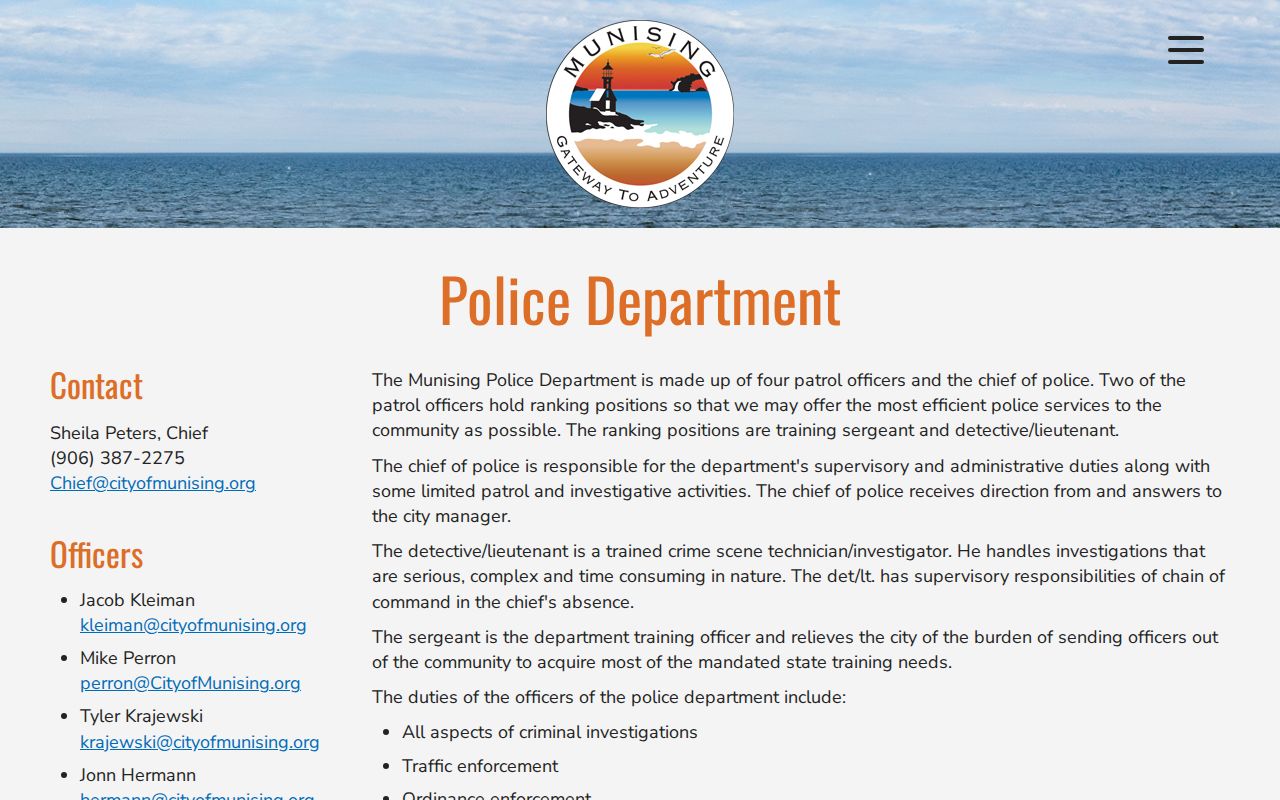
Read that page for the agency picture in Alger County, then take any case question straight to the district court.
Alger County Municipal Warrant Checks
Checking a city citation in Alger County takes three steps. Use the citation itself, the state case tools, and the district court clerk, never City Hall.
- Read the citation for the court name, the ordinance or statute, and the response date.
- Search the case in the state's public case search or ticket search.
- Call the 93rd District Court at (906) 387-3879 and ask which docket holds the matter.
- Ask whether any failure-to-appear or warrant action is open.
- Ask what the court requires next, and note the date you were told.
A Munising officer's department can confirm the ticket exists. It cannot tell you what a judge did afterward. A published list of prioritized cases is a different thing again, and the Alger County most wanted page explains how those programs work. For anything about a warrant, ask the clerk.
Alger County Municipal Warrant Records and FOIA
Alger County runs two records doors, and a city warrant question can touch either one. County open-records requests reach what a county office holds. Think of a sheriff policy or an existing report. Court records are different. The county's own procedures put courts outside that process. Court files are public unless a rule, statute, or order closes them. Michigan Court Rule 8.119 sets that standard. Sealed and juvenile material stays closed. An ordinance file can be partly restricted for the same reasons as any other case file. Requests for county-held records go to the courthouse at 101 Court Street in Munising, by fax at (906) 387-2156, or by email to foia@algercounty.gov.
Municipal Warrants: What They Show
A city case file reads like a short docket. Gather the fields below before you call an Alger County office, since the first two decide who answers.
| Case or Citation Number | The docket key, illustrated as 20XX-XXXXXX, taken from the paper you have. |
|---|---|
| Issuing Court | The 93rd District Court for Alger County ordinance, traffic, and civil infraction filings. |
| Ordinance or Statute | The rule the citation names, which tells you whether it is a city rule or a state one. |
| Violation Date and Officer | When the citation was written and which agency wrote it. |
| Status and Amounts | Payment, contest, or failure-to-appear status, plus any costs the court added. |
Where Alger County Municipal Warrants Are Filed
Local ordinances answer to a courtroom that is not local. In Alger County, city ordinance cases land in the district court rather than a city hall hearing room. The city posts its police and administrative rules online. That list tells you what each ordinance says. It does not show your case. For a warrant lookup, call the district court clerk and keep the ordinance number handy. The same goes for a state traffic citation. Alger County's district court handles those too, and the citation number still identifies the file. The rules themselves sit on the Munising police and administrative ordinances page, which prints the local laws the city enforces.
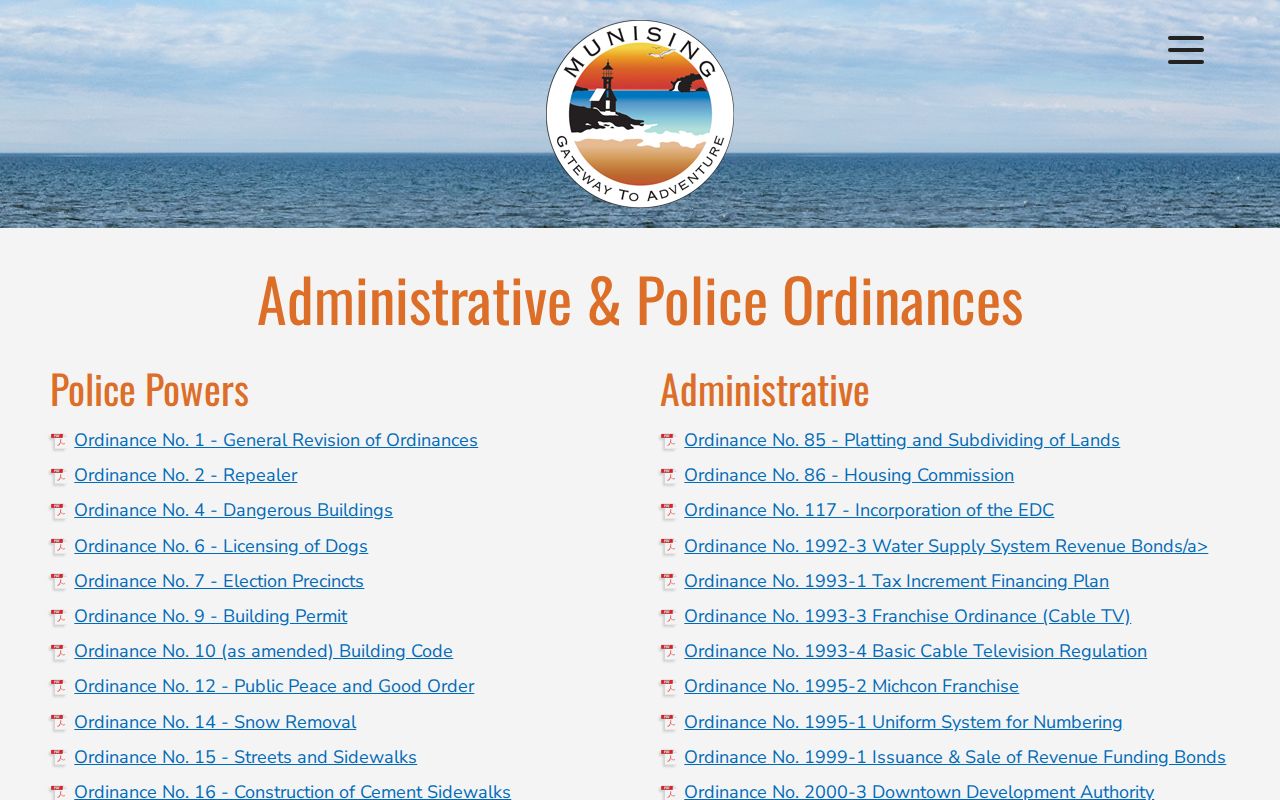
Use it to understand the charge, then use the court to understand the case.
Clearing a Municipal Court Warrant
Call the district court clerk first. A municipal warrant clears only in the court that issued it, and in Alger County that is the district court. Paying the fine, contesting the citation, and recalling the warrant are three separate steps, so ask about all three in one call. Bring your ID and the citation number. Ask what the court wants. Payment, an appearance, a bond, or a filing, and request any answer in writing when the court offers one. Keep every receipt.
Caution: Do not assume that paying a city ticket clears a court warrant. Ask the clerk whether any warrant or failure-to-appear action remains open.
Chatham Records and the Alger County Warrant Gap
Chatham keeps no police page of its own. The village has no court page either, and nothing like a warrant lookup. One county hazard plan from 2015 still lists village office details, but that document is history. Its address and phone have not been verified since. Treat the plan as background reading only. For anything you intend to act on, use the current Alger County sheriff and district court contacts. The sheriff's current contact block sits on the Alger County Sheriff page.
Note: A village without its own police department relies on the county sheriff for law enforcement, and its citations still land in the district court.
Federal Warrants Outside the Alger County Courts
Federal warrants never live in a city docket. A bench warrant from the Alger County district court is a state matter, and a federal case is something else entirely. Federal charges are filed in federal court. For this part of Michigan, the venue is the Western District courthouse in Marquette. Those dockets require an account, and sealed documents stay sealed. An Alger County case search will not surface a federal matter. If your paperwork names a United States district court, skip the municipal files and start at the federal case access gateway, which runs on its own system, apart from every county tool.
Keeping the two systems apart saves a reader a wasted call.