
Inside the Alger County Most Wanted Program
Most wanted programs are an agency's public appeal, never a website's project. The sponsoring office picks a handful of open cases, writes a short profile for each, and asks the public for tips. It is pressure aimed at a few hard cases. It is not a warrant list. Alger County has no such program today. The sheriff posts a full service list and a phone line staffed day and night, but no roster, no photo gallery, no reward schedule, and no tip form. The county's updates page carries no partnership announcement either. What a resident finds instead is a working department that answers its phone and handles its own casework, and no Alger County list of wanted people is published anywhere.
No Alger County Most Wanted List Was Located
Reading this gap takes care. No sheriff or county office in Alger County publishes a most wanted program. That says nothing about whether warrants exist, and nothing about whether a list appears later. Warrants exist in every county; a public roster is a choice. There is also nothing to copy here. No names, photographs, or roster entries belong on this subject, because a wrong name or an outdated photo can hurt a real person. The place an announcement would surface is the county's own news feed, at Alger County latest updates.
Note: A cached page, an old PDF, or a social post does not establish that a current official list exists.
How Alger County Most Wanted Lists Work
Where these lists exist, they share a shape. A supervisor or a task force reviews open cases, chooses the ones with the strongest public appeal, and drafts a short entry for each. Entries come down when an arrest closes the case. The refresh schedule belongs to the agency alone. The selection is editorial, so a most wanted list never shows every open warrant in Alger County. It is a subset picked for attention. Confusing the two sends a reader to the wrong office. Alger County has no list at all right now, which makes the distinction easier to see: even a published list would show which cases the sheriff chose to spotlight, not the full set of outstanding warrants sitting in the files.
What an Official Alger County Most Wanted Program Publishes
Judging a real program is easy once it writes things down. A genuine Alger County list would name its sponsoring agency on an official domain, date each entry, and explain what happens after a tip arrives. Vague posters with no sponsor deserve doubt.
- The sponsoring agency, its official page, and a current update date
- What qualifies a case for the list, and when entries are removed
- A named tip channel, with a note on whether tips can be anonymous
- Whether a reward exists, who pays it, and what conditions apply
- A clear instruction not to approach anyone on the list
Anything missing those elements is worth a phone call before you act on it.
Sending an Alger County Most Wanted Tip Safely
Tips belong with the agency that runs the program, not with a records desk or a general inquiry line. In Alger County, the sheriff's main line is the law enforcement contact, and the county says it is staffed around the clock. Never approach someone you believe is wanted. Report what you know. Trained officers decide what happens next.
Key Point: Call the sheriff's main line at (906) 387-4444 for a law enforcement matter, and reserve emergency numbers for emergencies rather than records questions.
Tips Are Not Alger County Warrant Checks
A tip line takes information in. It does not give status out. Asking whether a relative has an outstanding warrant is a records question, and the answer belongs to the court that issued the process. The two functions stay separate for good reason. Tips can be anonymous and can be acted on fast. Case status needs an identified caller, a case number, and a court willing to confirm what its docket shows. Alger County does not blur that line, and nobody at a tip desk will run a warrant check for you. The sheriff's services and contact details sit on the Alger County Sheriff page.
How Alger County Most Wanted Differs From a Warrant
People use the two phrases as if they matched. They do not. A most wanted entry is a chosen spotlight. The full set of open process in one court's files is a separate subject, and the Alger County active warrant search covers that side of it.
| Point | Most Wanted List | Active Warrant |
|---|---|---|
| Who builds it | An agency, by selection | A judge, case by case |
| How complete it is | A small curated subset | Every open process in a court's files |
| How it ends | The entry comes down after an arrest or case closure | The court recalls or serves the process |
| Where to confirm | The sponsoring agency | The issuing court |
Federal Fugitive Information Belongs to the Marshals
Federal fugitive cases never run through a county sheriff or a county list. The United States Marshals Service handles federal process in the Western District of Michigan, and the federal court in Marquette is the venue for federal matters in this part of the state. A reader with a federal docket number should start on that route. A county search will not surface a federal case. No Alger County agency can confirm one. The district office publishes its own page at the U.S. Marshals Western District of Michigan page, and the court location appears on the federal court page for Marquette. Alger County residents facing a federal question go there first.
When You Believe You Are Listed
Believe your name appears on an Alger County list? Don't dial the tip line. Don't walk into a lobby to ask, either. A Michigan attorney can contact the issuing court or the agency on your behalf, which keeps the question off a public counter. That's the safer first move. You can also pull the court docket and read the case for yourself. Ask the court whether a warrant is open, what the bond or release conditions are, and what the court wants next. The docket holds those answers, not a poster or a web page. The handling steps on the Alger County warrant records home page start with the same two calls.
Important: Do not approach anyone you believe is wanted, and do not act on a warrant question without counsel. Court and agency contacts are the only reliable route.
Records Access When an Alger County List Appears
Alger County records split along one familiar line. Documents held by a county office fall under Michigan's open-records law. That law runs on a five-business-day clock, with one possible ten-business-day extension. Court records are different. You reach those through the court itself. The county clerk keeps the circuit records, and the county's FOIA page carries the request forms, the fee notes, and the coordinator route. Describe an existing document in your request. Alger County is not required to create a record or answer a legal question. The clerk and register of deeds page describes the circuit-record role. The FOIA page lays out the request process.
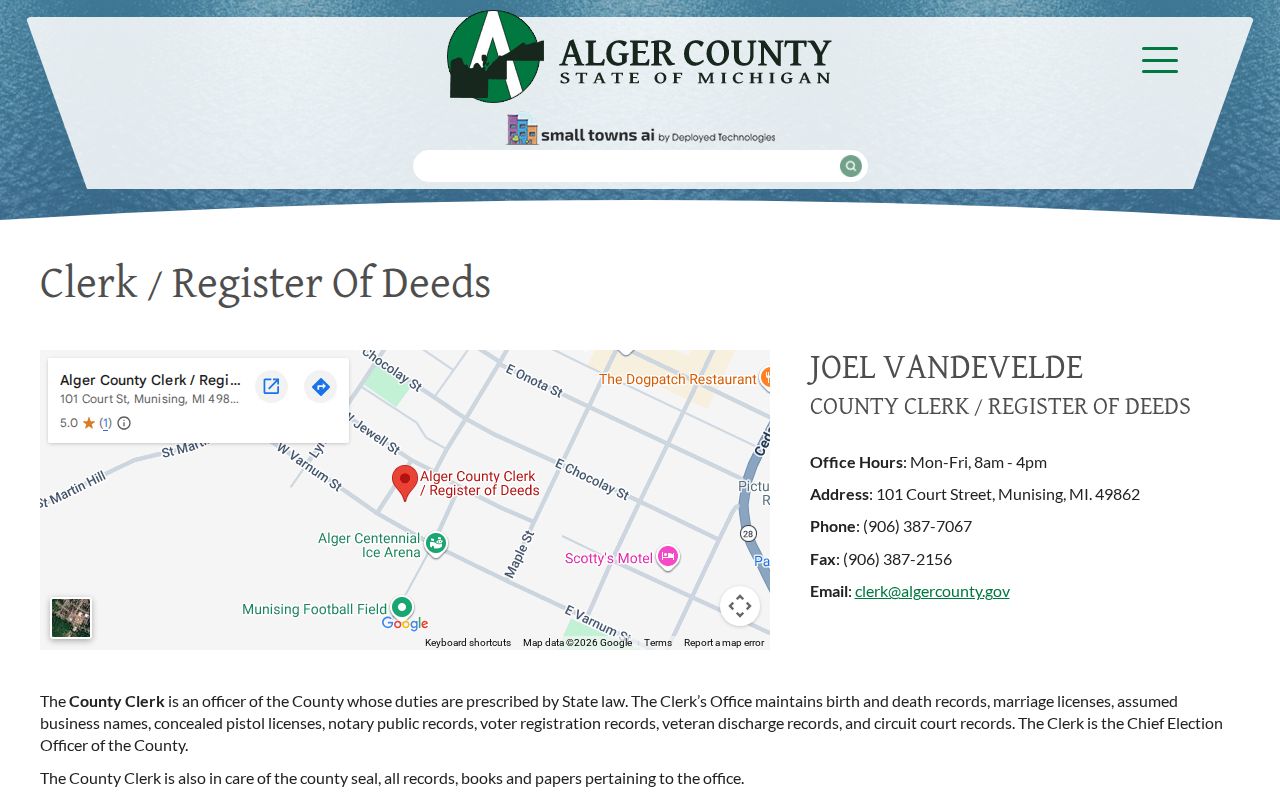
The clerk route covers circuit records, and the FOIA route covers county-held documents.
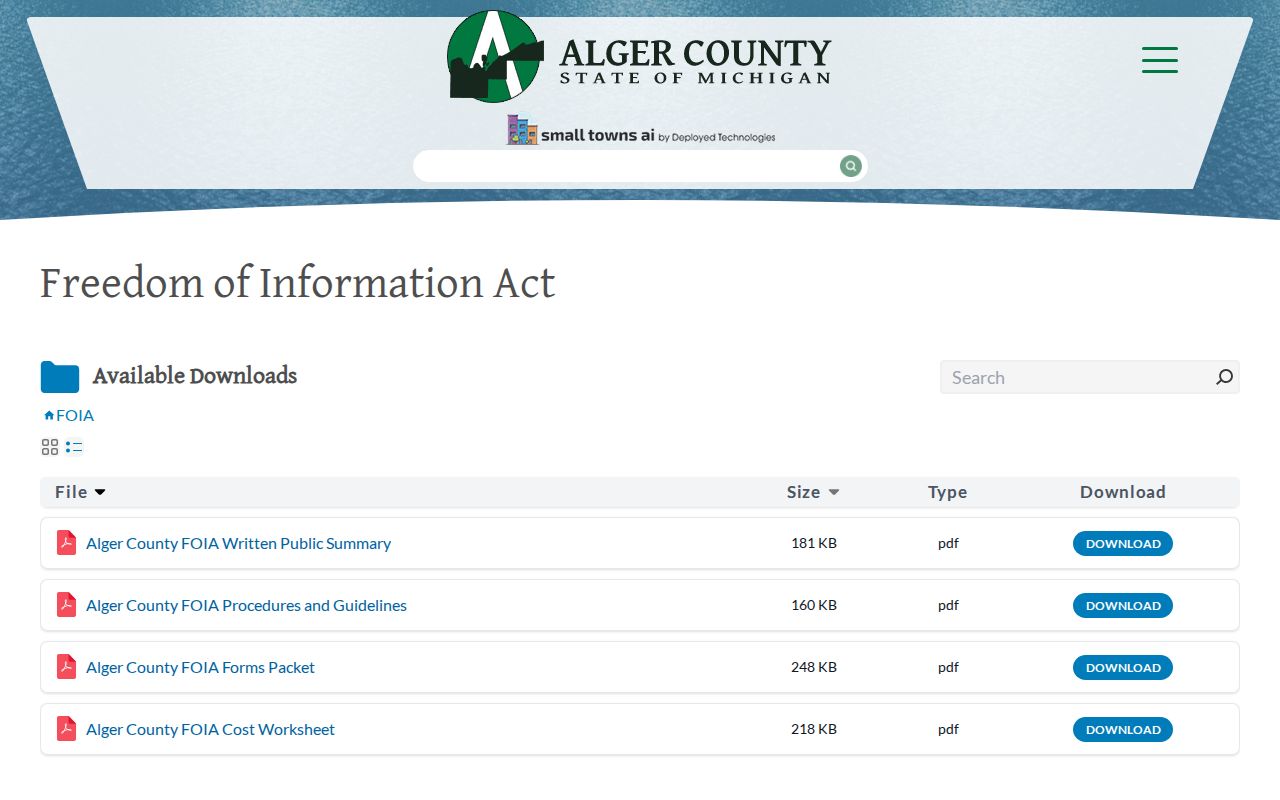
Use both Alger County pages together when a program appears and you want to know exactly what that office publishes about it.